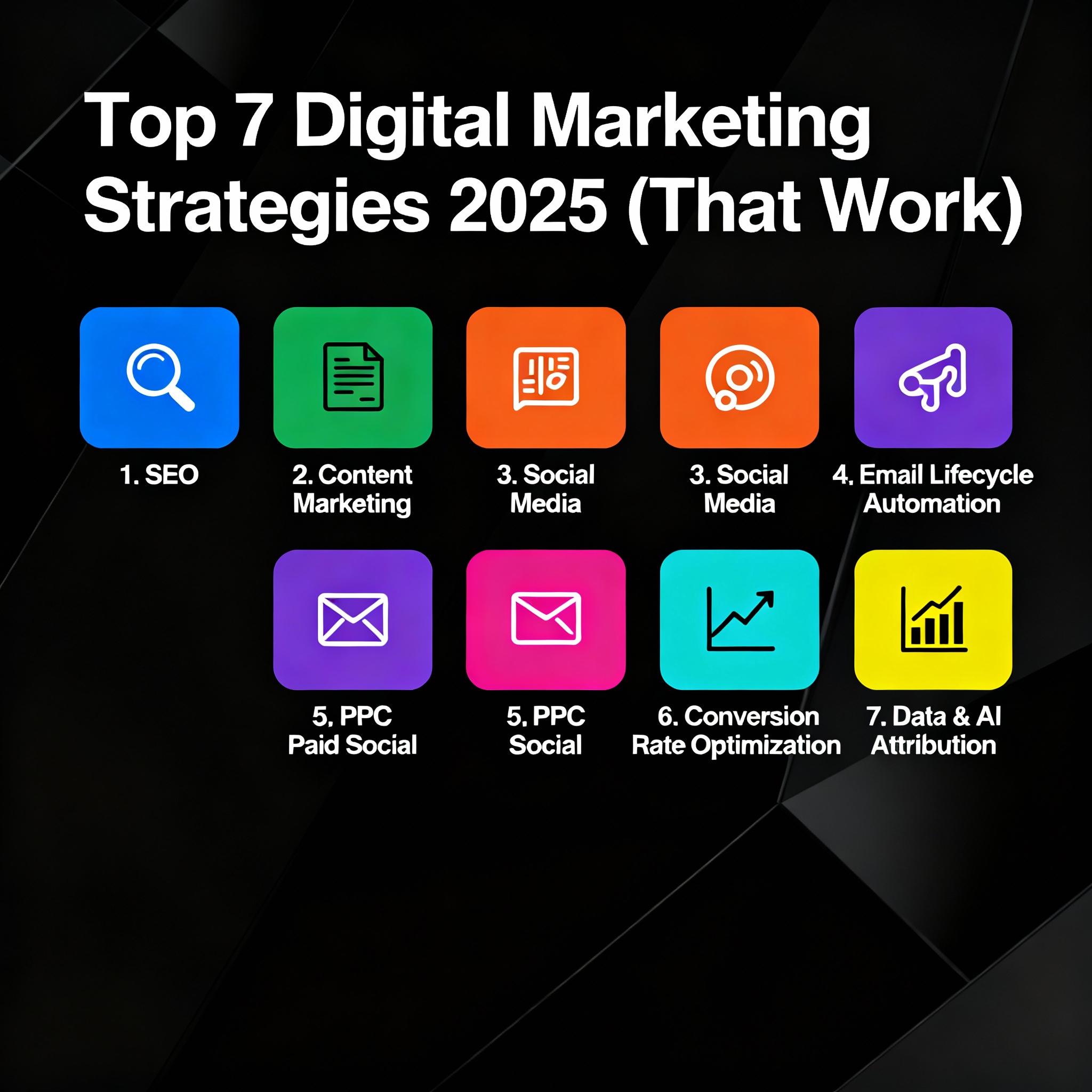
Getting visitors to your website is important. But what happens after they arrive?
Some visitors browse your services, explore your products or read your content. Others leave within seconds. Even when people show interest, many do not complete the action you want them to take.
This is where conversion rate optimization (CRO) becomes important.
Instead of focusing only on attracting more website traffic, CRO helps you make better use of the visitors you already have. It involves understanding user behaviour, identifying what prevents people from taking action and improving the website experience to encourage more enquiries, purchases, bookings or sign-ups.
For businesses investing in SEO, Google Ads or social media marketing, this can make a meaningful difference. More traffic does not automatically mean more customers. Your website needs to turn that attention into action. Related service: SEO services
In this guide, we explain what conversion rate optimization is, how it works, which strategies businesses can use and how to measure whether improvements are working.
What Is Conversion Rate Optimization (CRO)?
Conversion rate optimization is the process of improving a website or landing page to increase the percentage of visitors who complete a desired action.
A conversion can mean different things depending on your business goals. For an e-commerce store, it might be a completed purchase. For a service-based company, it could be a phone call, contact form submission or consultation booking.
The purpose of CRO is not simply to make a website look better. It is to make the experience clearer, easier and more relevant so visitors can take the next step with confidence.
For example, imagine a business receives 2,000 website visitors in one month, but only 20 people submit an enquiry form. Reviewing the website's messaging, navigation and enquiry process may reveal opportunities to improve the experience without necessarily increasing traffic.
How Do You Calculate Website Conversion Rate?
Your website conversion rate measures the percentage of visitors or sessions that complete a specific goal.
Conversion Rate = (Number of Conversions ÷ Total Visitors) × 100
For example, if a website records 2,000 visitors and 40 completed enquiries, the visitor-based conversion rate is 2%.
Define what counts as a conversion before calculating the rate. A purchase, form submission, phone call and newsletter subscription are different conversion events. Also be consistent about whether you are measuring users, sessions or another denominator, because different methods can produce different rates.
Why Is Conversion Rate Optimization Important for Businesses?
Many businesses invest in driving traffic but spend less time understanding what visitors do after reaching their website. A website may receive clicks from Google, social media or paid advertisements, yet still generate fewer enquiries than expected. The issue might not be the traffic source; it could be the experience visitors encounter.
- Make better use of existing traffic: CRO helps identify where visitors lose interest and what could make their journey easier.
- Improve user experience: Clear navigation, readable content, relevant information and visible calls to action make it easier for people to find what they need.
- Support marketing performance: SEO, PPC and social media bring potential customers to a website. CRO focuses on what happens after that visit.
- Build trust: Genuine reviews, relevant case studies, transparent service descriptions and clear contact information can reduce uncertainty.
- Use evidence instead of guesswork: Analytics, user feedback and testing help identify what needs improvement.
10 Practical Conversion Rate Optimization Strategies
Effective CRO does not always require a complete website redesign. Small improvements to important pages can make the experience clearer.
1. Create Clear and Compelling Headlines
Your headline should help visitors quickly understand what you offer and whether it is relevant to them. Avoid vague statements that sound impressive but explain very little. A specific headline such as “Digital Marketing Services for Growing Businesses” communicates more than a generic claim about innovative solutions. Make sure the headline reflects the actual offer.
2. Make Your Call to Action Easy to Find
A call to action (CTA) tells visitors what they can do next. Examples include “Request a Consultation”, “Get a Quote”, “Book a Demo” and “Shop Now”. Use specific wording and place the CTA where it naturally follows the information visitors need. Avoid filling every section with competing buttons.
3. Improve Landing Page Optimization
A landing page should be designed around a specific audience and objective. Someone who clicks an advertisement for website development should land on a page that explains website development, not a generic page where the visitor must search for the service. Include a clear headline, relevant benefits, genuine trust signals, useful examples and a focused next step. Related service: PPC advertising
4. Make Your Website Mobile-Friendly
Review your website on smartphones and tablets. Text should be readable, buttons should be easy to tap, menus should be usable and forms should be comfortable to complete. Important information should not be hidden or difficult to access. Mobile usability should be part of conversion optimization, not an afterthought. Related service: website development
5. Improve Website Loading Speed
Slow pages can interrupt the browsing experience, especially on mobile networks. Review image sizes, scripts, caching, hosting performance and unused website components. Google PageSpeed Insights can help identify performance opportunities. Google's Core Web Vitals targets include LCP of 2.5 seconds or less, INP of 200 milliseconds or less and CLS of 0.1 or less. These are user-experience targets, not guaranteed conversion benchmarks.
6. Simplify Contact and Checkout Forms
Every additional field creates another step. Ask only for information your business genuinely needs. A basic service enquiry may need a name, phone number or email, service required and a short message. Explain required fields clearly and make it easy to correct mistakes.
7. Add Genuine Trust Signals
Visitors may hesitate before submitting an enquiry or making a purchase. Help them understand why your business is credible with genuine customer reviews, relevant project portfolios, verified testimonials, real business information and transparent service descriptions. Do not create fake testimonials or unsupported performance claims.
8. Make Website Navigation Simple
Organise navigation around the questions your audience is likely to have. Service businesses might use sections such as Home, About, Services, Projects, Blog and Contact. Use descriptive labels and link related blog content to relevant service pages so visitors can continue exploring naturally. Related service: web design
9. Use A/B Testing Before Major Changes
A/B testing compares two versions of a page or element against a defined goal. You might compare headlines, CTA wording, form length or page layouts. Start with a hypothesis, use the same conversion definition and allow enough time and data to interpret the result. A handful of conversions is rarely enough to establish a reliable winner.
10. Understand Where Visitors Leave Your Website
Use analytics and behaviour tools to review pages with high traffic but few conversions, forms that are started but not completed, checkout steps where users abandon and differences between mobile and desktop. These observations help prioritise improvements based on evidence.
What Are the Most Common Reasons Websites Fail to Convert?
Common barriers include unclear messaging, weak calls to action, slow loading, complicated forms, poor mobile usability, missing trust signals, irrelevant landing pages and confusing navigation. Before redesigning the entire website, identify which issues are actually affecting your audience. Fixing a specific obstacle can be more useful than changing everything at once.
How to Measure Conversion Rate Optimization Results
CRO should be measured using meaningful business outcomes, not just website activity. Choose metrics that match your business model and conversion goal.
- Conversion rate: The percentage of measured visitors or sessions that complete a defined action.
- Lead form completion rate: The share of eligible visitors who complete and submit a form, using a clearly defined starting population.
- Cost per lead: The amount spent to generate a lead through a particular marketing channel or campaign.
- Cart abandonment rate: The percentage of shopping carts that do not result in a completed purchase, using a consistent measurement method.
- Qualified lead rate: The percentage of generated leads that meet your business's qualification criteria. This is especially important for service businesses because more enquiries are not always better if they are irrelevant.
Which Tools Can Help With CRO?
Google Analytics 4 can track key events, traffic sources and user journeys. Google Search Console helps review organic search performance. Google PageSpeed Insights reports page performance information. Microsoft Clarity offers supported session recordings and heatmaps. A/B testing platforms can help run controlled experiments on eligible website elements.
Use tools together: analytics can show what is happening, while behaviour observations can help investigate why.
A Practical Conversion Rate Optimization Process
- Define your conversion goal. Decide whether the priority is a purchase, enquiry, phone call, appointment or registration.
- Review your website data. Identify important pages, traffic sources and conversion patterns.
- Identify friction points. Look for unclear messaging, poor navigation, slow pages and unnecessary form fields.
- Prioritise improvements. Start with pages that have meaningful traffic and a clear business purpose.
- Make a focused change. Where possible, use controlled experiments. If formal testing is not practical, compare performance carefully and account for other changes.
- Measure and learn. Review results against the original goal. Keep changes that produce reliable benefits and investigate unclear results.
Conversion Rate Optimization for Small Businesses
CRO is not limited to large e-commerce brands. Small businesses can also improve how their websites generate enquiries.
Consider a local service provider in Ahmedabad. A potential customer searches online, visits the business website and wants to enquire. However, the contact number is difficult to find, the service information is unclear and the form asks for too many details. The visitor leaves and contacts another provider.
The business could make its services easier to understand, place a visible call button on mobile screens, simplify the enquiry form and add genuine project examples. These changes make the customer journey easier to follow.
For local businesses, CRO can work alongside local SEO, Google Business Profile optimization and paid advertising. Each channel may bring potential customers to the website, but the website experience helps them decide whether to take the next step. Related service: social media marketing
Final Thoughts: Turn More Website Visits Into Meaningful Business Opportunities
Getting people to visit your website is only one part of digital growth. Visitors also need to understand your offer, trust your business and be able to take the action they came to complete.
From clearer messaging and better landing pages to faster loading times and simpler enquiry forms, every improvement should solve a real problem in the customer journey.
At Onceseen, we believe a website should do more than simply look professional. It should communicate value, create a smooth user experience and support meaningful business goals.
If your website is attracting visitors but not generating the enquiries or sales you expect, review the experience behind those visits. Connect with Onceseen to explore website optimization, digital marketing and conversion-focused solutions for your business. Contact Onceseen